

What is Coinbase Text Scam – Removal & Protection Guide
If you have received a suspicious message claiming to be from Coinbase about unusual account activity, locked funds, or urgent verification, you may be targeted by the Coinbase Text Scam. Read this article to find out how this scam operates, whether it can involve malware, and how to protect yourself from serious financial and data loss.
The Coinbase Text Scam is a form of smishing attack (SMS phishing) where cybercriminals impersonate the legitimate cryptocurrency platform Coinbase. These messages are designed to create urgency and panic, often warning users about unauthorized transactions or account breaches. The ultimate goal is to trick victims into clicking malicious links, revealing sensitive credentials, or installing harmful software.
While the scam itself is primarily social engineering-based, it can also act as an entry point for malware infections. Some campaigns are specifically designed to deliver malicious payloads that compromise the user’s device and steal valuable data such as login credentials and cryptocurrency wallet access.
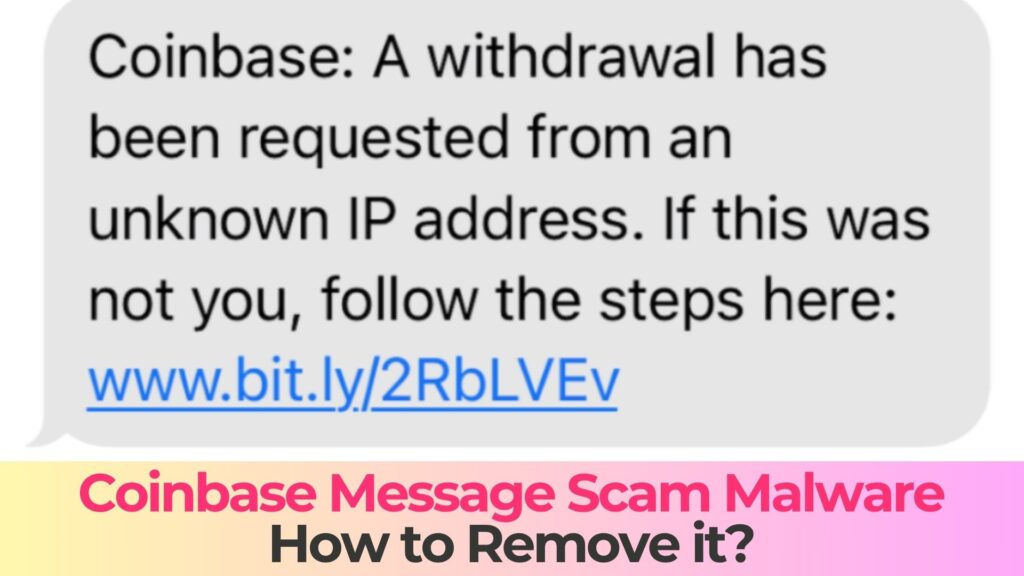
Coinbase text scam Short Overview
| Type | Scam, Browser Hijacker, Redirect, PUP |
| Short Description | A suspicious website that steals data and causes redirects. |
| Symptoms | Unwanted pop-ups may start appearing while you are browsing the web. A browser hijacker may be downloaded without your knowledge. |
| Removal Time | Approximately 15 minutes for a full-system scan |
| Removal Tool |
See If Your System Has Been Affected by malware
Download
Malware Removal Tool
|
How Did I Get the Coinbase Text Scam?
Receiving a Coinbase scam message does not necessarily indicate that your device is infected. Instead, it means your phone number has likely been exposed or randomly targeted by attackers conducting large-scale phishing campaigns.
Common methods used by scammers to obtain phone numbers include:
- Data breaches involving online services and platforms.
- Leaked databases sold on underground cybercriminal forums.
- Public listings or social media exposure of contact details.
- Automated number generation used for mass SMS distribution.
In some cases, users who have previously interacted with cryptocurrency-related services may be specifically targeted, as attackers assume a higher likelihood of engagement. However, many campaigns are indiscriminate and rely on volume rather than precision.
Additionally, users may encounter these scams after clicking suspicious ads, visiting compromised websites, or interacting with fake crypto-related offers that collect contact information.
What Does the Coinbase Text Scam Do?
The Coinbase Text Scam is designed to manipulate victims into taking actions that compromise their financial security and personal data. Depending on the specific campaign, the attack may involve phishing, credential harvesting, or malware deployment.
Typical behaviors associated with this scam include:
- Redirecting users to fake Coinbase login pages that steal credentials.
- Prompting victims to enter two-factor authentication (2FA) codes.
- Encouraging the download of fake security apps or updates containing malware.
- Initiating unauthorized cryptocurrency transfers once access is gained.
- Collecting personal data for identity theft or resale on the dark web.
In malware-related variants, clicking the provided link may trigger the download of trojans or spyware. These threats can monitor user activity, capture keystrokes, and extract sensitive files. Some may also establish persistence mechanisms, allowing attackers continued access to the infected device.
Another dangerous aspect is session hijacking. If attackers obtain authentication tokens or cookies, they may bypass login credentials entirely and gain direct access to user accounts.
Because cryptocurrency transactions are typically irreversible, victims may suffer permanent financial loss if attackers successfully gain control of their accounts.
How to Remove It
Addressing the Coinbase Text Scam involves both removing potential threats and securing any compromised accounts. Even if no malware is immediately visible, precautionary measures are essential.
Key actions to take include:
- Deleting the suspicious message and avoiding further interaction.
- Running a full system scan using a trusted anti-malware solution.
- Removing any recently installed or unknown applications.
- Checking browser extensions for suspicious additions.
- Revoking access to unknown devices or sessions in your Coinbase account.
If you have clicked a link or entered credentials, it is critical to act immediately by resetting your passwords and enabling stronger authentication methods.
Ensure that your device operating system and all applications are up to date, as outdated software may be more vulnerable to exploitation by malware.
Monitoring your accounts for unusual activity and securing your digital wallet should be a top priority following any suspected compromise.
What Should You Do?
The Coinbase Text Scam is a high-risk threat due to its direct connection to financial assets. Always treat unsolicited messages regarding your cryptocurrency accounts with caution, especially those that create urgency or demand immediate action.
Never click on links in unexpected messages. Instead, access your Coinbase account directly through the official app or website to verify any claims. This simple step can prevent most phishing attempts.
Strengthen your security by using strong, unique passwords and enabling multi-factor authentication. Consider using hardware-based security keys for additional protection if you manage significant cryptocurrency assets.
If you suspect that your device or account has been compromised, take immediate action to secure your information and remove any potential threats. Follow the removal instructions provided below to protect your system and prevent further damage.

Ventsislav Krastev
Ventsislav is a cybersecurity expert at SensorsTechForum since 2015. He has been researching, covering, helping victims with the latest malware infections plus testing and reviewing software and the newest tech developments. Having graduated Marketing as well, Ventsislav also has passion for learning new shifts and innovations in cybersecurity that become game changers. After studying Value Chain Management, Network Administration and Computer Administration of System Applications, he found his true calling within the cybersecrurity industry and is a strong believer in the education of every user towards online safety and security.
Follow Me: