

Msedge.vg Virus is a deceptive browser-based threat that abuses push notifications to flood users with intrusive ads and redirect them to risky websites. It often appears as a fake CAPTCHA verification page, tricking users into clicking “Allow” in order to prove they are not robots. Read this article to find out what Msedge.vg Virus is, how it infiltrates your browser, what it does after gaining permission, and how to remove it effectively.
What is Msedge.vg Virus?
Msedge.vg Virus is not a traditional file-based virus, but rather a browser hijacker and notification spam threat that abuses legitimate browser features. It operates through malicious or misleading websites that request permission to send push notifications. Once granted, these permissions allow the site to deliver unwanted advertisements directly to the user’s desktop or browser, even when the site itself is not open.
This threat is particularly dangerous because it relies on social engineering tactics rather than exploiting software vulnerabilities. The site often presents a fake CAPTCHA verification screen, claiming that users must click “Allow” to confirm they are human. In reality, this action subscribes the user to a continuous stream of spam notifications.

Msedge.vg Short Overview
| Type | Browser Hijacker, Redirect, PUP |
| Short Description | A suspicious website that steals data and causes redirects. |
| Symptoms | Unwanted pop-ups may start appearing while you are browsing the web. A browser hijacker may be downloaded without your knowledge. |
| Removal Time | Approximately 15 minutes for a full-system scan |
| Removal Tool |
See If Your System Has Been Affected by malware
Download
Malware Removal Tool
|
The name “Msedge.vg” may be intentionally chosen to resemble legitimate services or system components, such as Microsoft Edge, in order to build trust and reduce suspicion. However, it has no connection to legitimate browser functionality and should be treated as a malicious domain involved in ad fraud and redirection schemes.
Once permission is granted, the site can deliver various types of content, including fake alerts, phishing messages, scam offers, and links to potentially harmful downloads. This makes it a gateway to more serious threats, including malware infections and data theft.
Why Msedge.vg is unsafe
The danger of this threat lies in its ability to continuously interact with the user through notifications, increasing the likelihood of accidental clicks and further compromise.
- It abuses browser notification permissions to deliver spam.
- It uses fake CAPTCHA pages to trick users.
- It redirects users to unsafe or malicious websites.
- It may promote scams, phishing pages, or malware downloads.
- It can degrade browsing experience and system usability.
How Did I Get It on My PC?
Msedge.vg Virus typically appears as a result of visiting unsafe or compromised websites. Users are often redirected to such pages through malicious advertisements, pop-ups, or links generated by adware already present on the system. In many cases, the user does not intentionally navigate to the site but is instead forced there through aggressive redirect chains.
Once on the page, the user is presented with a convincing fake CAPTCHA prompt. The message may claim that clicking “Allow” is necessary to continue browsing, watch a video, download a file, or access specific content. This tactic exploits familiarity with legitimate CAPTCHA systems to trick users into granting notification permissions.
Another common infection route involves bundled software. If adware is installed on the system, it may modify browser settings and generate frequent redirects to domains like Msedge.vg. This creates a cycle where the user is repeatedly exposed to deceptive pages until they eventually click “Allow.”
In some cases, users may also encounter this threat through email links, social media messages, or compromised websites. The common factor in all these scenarios is the reliance on user interaction to enable the malicious behavior.
Common distribution methods
Understanding how Msedge.vg reaches users can help prevent future encounters with similar threats.
- Redirects from malicious or compromised websites.
- Intrusive ads and pop-ups generated by adware.
- Fake CAPTCHA verification pages.
- Bundled software installations that include adware.
- Links in emails, messages, or social media posts.
Because this threat relies heavily on browser permissions, it does not require traditional installation. A single click on the “Allow” button is enough to activate its primary functionality.
What Does It Do on the System?
After gaining notification permission, Msedge.vg begins to send a continuous stream of push notifications to the affected browser. These notifications can appear as system alerts, news updates, or promotional messages, but they are often misleading or malicious in nature. Clicking on them can lead to a variety of unsafe destinations.
One of the primary goals of this threat is to generate revenue through ad fraud. By pushing users to click on ads and visit sponsored pages, the operators behind Msedge.vg can earn money from traffic and impressions. However, this monetization strategy often comes at the expense of user safety.
The notifications may also promote phishing schemes designed to steal personal information. For example, users may be redirected to fake login pages that mimic legitimate services, prompting them to enter sensitive data such as usernames, passwords, or payment details.
In addition, the threat may expose users to further malware infections. Some notifications may lead to pages that automatically download suspicious files or encourage users to install fake updates and software. This can result in additional threats being installed on the system, compounding the problem.
Over time, the constant influx of notifications can become overwhelming, disrupting normal computer usage and reducing productivity. The presence of such activity is a clear sign that the browser’s notification permissions have been compromised.
Typical malicious behavior
The actions performed by Msedge.vg are focused on persistence, user manipulation, and monetization.
- Sending intrusive push notifications to the desktop or browser.
- Redirecting users to phishing or scam websites.
- Promoting fake software updates and downloads.
- Generating revenue through ad clicks and impressions.
- Exposing users to additional malware threats.
- Tracking user interaction with ads and content.
Although it may not directly damage system files, its ability to lead users to dangerous content makes it a significant security risk.
How to Remove It
Removing Msedge.vg Virus involves revoking the notification permissions granted to the malicious site and ensuring that no adware remains on the system. Since the threat operates through the browser, the primary focus should be on cleaning browser settings and eliminating any sources of unwanted redirects.
The first step is to access the browser’s notification settings and identify any suspicious or unknown websites that have permission to send notifications. Msedge.vg should be removed or blocked immediately. This will stop the flow of spam notifications.
Next, users should review installed browser extensions and remove any that appear unfamiliar or unnecessary. Malicious or unwanted extensions can contribute to redirects and other unwanted behavior.
It is also important to scan the system with a reliable anti-malware tool. This can help detect and remove any adware or potentially unwanted programs that may have led to the initial exposure. A full system scan ensures that all components of the threat are addressed.
Resetting the browser to its default settings can further help eliminate residual changes. This includes restoring the home page, search engine, and new tab page configuration.
Users should remain cautious after removal, avoiding suspicious websites and being mindful of permission requests. Legitimate websites rarely require notification permissions to function properly, especially for simple actions like CAPTCHA verification.
What effective removal includes
A complete cleanup process should address both the browser and the system environment.
- Revoking notification permissions from Msedge.vg.
- Removing suspicious browser extensions.
- Resetting browser settings to default.
- Scanning the system for adware and unwanted programs.
- Clearing browser cache and site data.
- Updating browser and security software.
Taking these steps will help restore normal browser behavior and reduce the risk of future notification-based threats.
What should you do?
If you are seeing notifications from Msedge.vg, you should act immediately to block the site and clean your browser. Do not click on any of the notifications, as they may lead to phishing pages or malware downloads. Instead, focus on removing the permissions and scanning your system for any underlying issues.
Stay cautious when encountering CAPTCHA prompts that request notification permissions, as this is a common tactic used by similar threats. Always verify the legitimacy of a website before interacting with it.
Follow the removal instructions provided below this article to completely eliminate Msedge.vg Virus and protect your system from further risks.

Ventsislav Krastev
Ventsislav is a cybersecurity expert at SensorsTechForum since 2015. He has been researching, covering, helping victims with the latest malware infections plus testing and reviewing software and the newest tech developments. Having graduated Marketing as well, Ventsislav also has passion for learning new shifts and innovations in cybersecurity that become game changers. After studying Value Chain Management, Network Administration and Computer Administration of System Applications, he found his true calling within the cybersecrurity industry and is a strong believer in the education of every user towards online safety and security.
Follow Me:
Preparation before removing Msedge.vg.
Before starting the actual removal process, we recommend that you do the following preparation steps.
- Make sure you have these instructions always open and in front of your eyes.
- Do a backup of all of your files, even if they could be damaged. You should back up your data with a cloud backup solution and insure your files against any type of loss, even from the most severe threats.
- Be patient as this could take a while.
- Scan for Malware
- Fix Registries
- Remove Virus Files
Step 1: Scan for Msedge.vg with SpyHunter Anti-Malware Tool
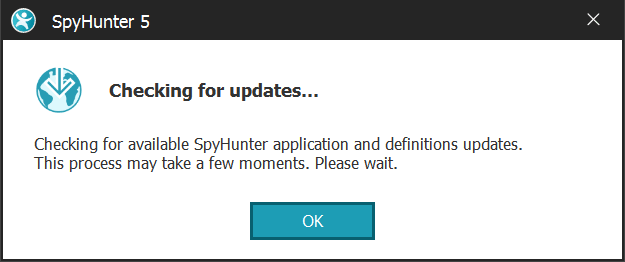
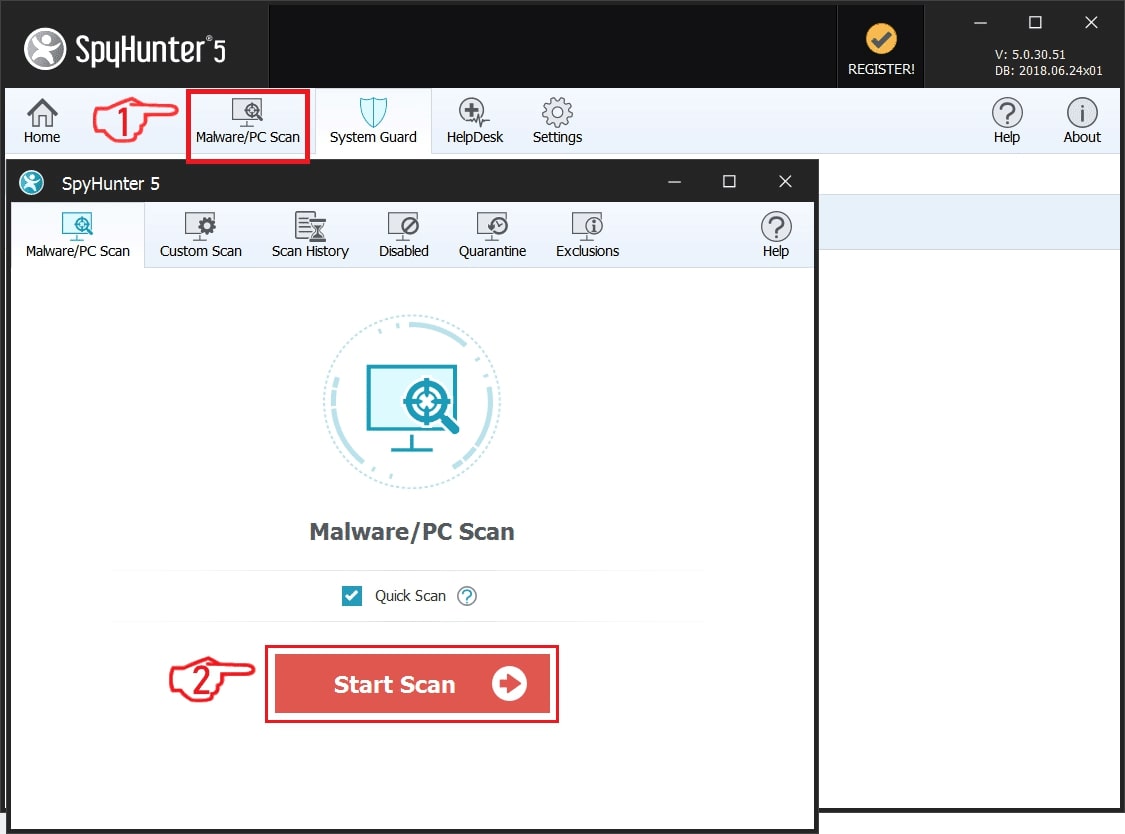
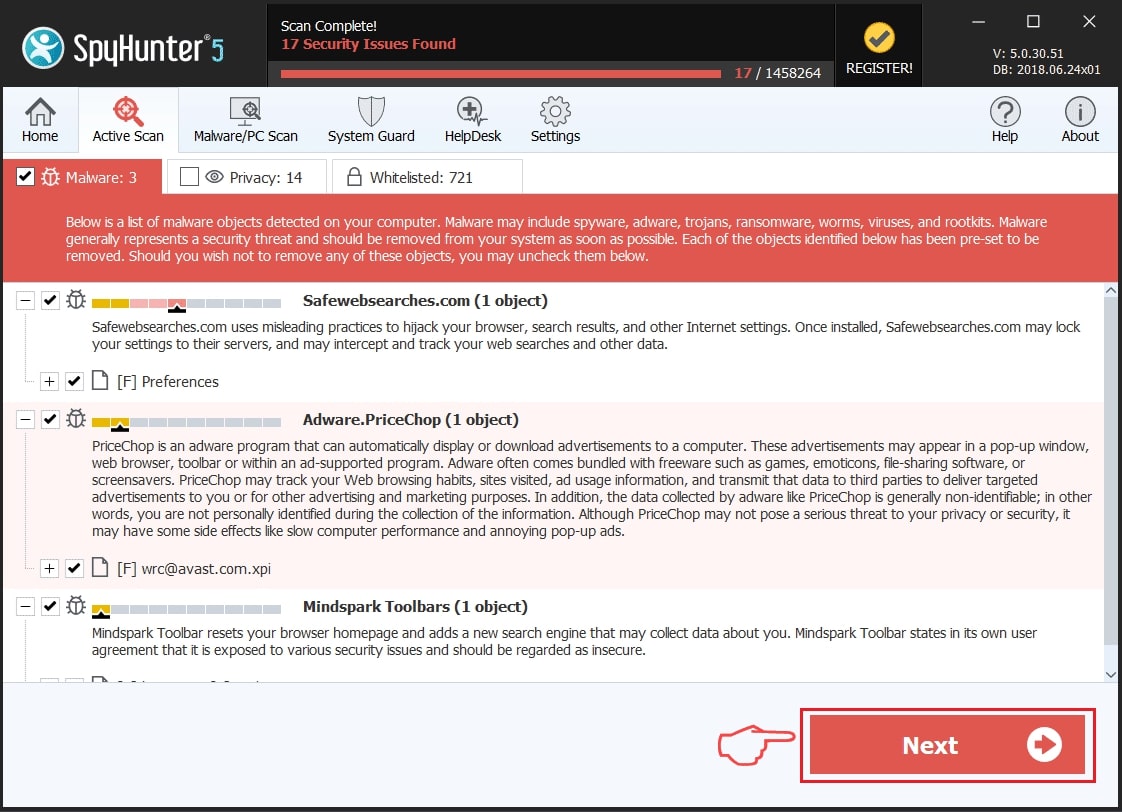
Step 2: Clean any registries, created by Msedge.vg on your computer.
The usually targeted registries of Windows machines are the following:
- HKEY_LOCAL_MACHINE\Software\Microsoft\Windows\CurrentVersion\Run
- HKEY_CURRENT_USER\Software\Microsoft\Windows\CurrentVersion\Run
- HKEY_LOCAL_MACHINE\Software\Microsoft\Windows\CurrentVersion\RunOnce
- HKEY_CURRENT_USER\Software\Microsoft\Windows\CurrentVersion\RunOnce
You can access them by opening the Windows registry editor and deleting any values, created by Msedge.vg there. This can happen by following the steps underneath:
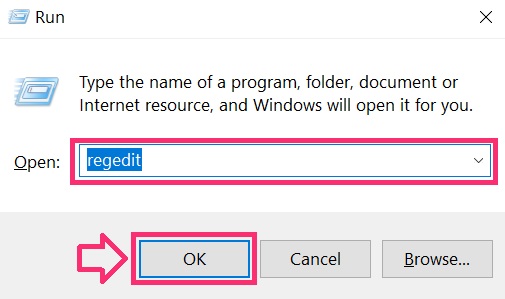
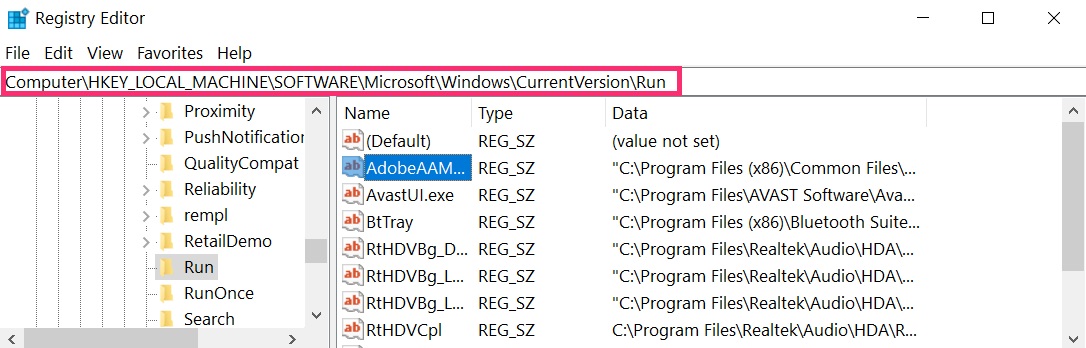
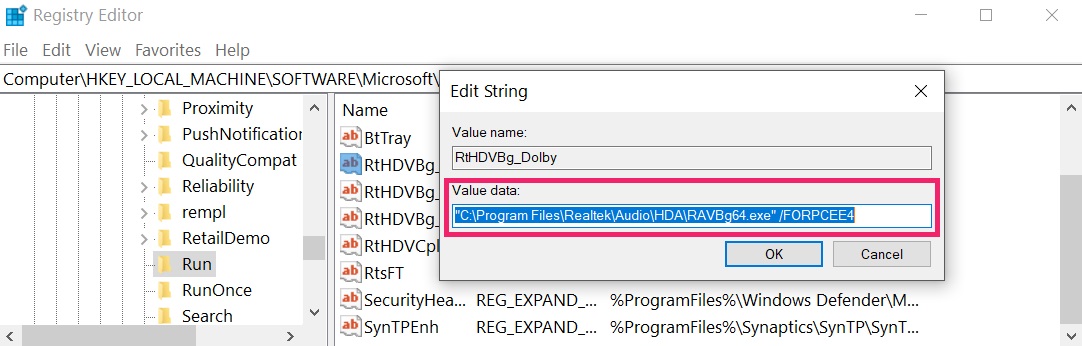 Tip: To find a virus-created value, you can right-click on it and click "Modify" to see which file it is set to run. If this is the virus file location, remove the value.
Step 3: Find virus files created by Msedge.vg on your PC.
1.For Windows 8, 8.1 and 10.
For Newer Windows Operating Systems
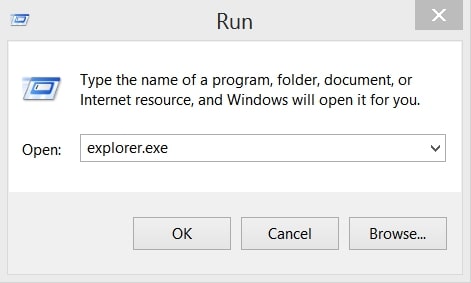
1: On your keyboard press + R and write explorer.exe in the Run text box and then click on the Ok button.
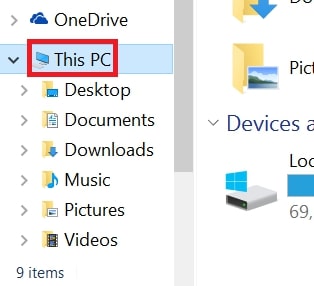
2: Click on your PC from the quick access bar. This is usually an icon with a monitor and its name is either “My Computer”, “My PC” or “This PC” or whatever you have named it.
3: Navigate to the search box in the top-right of your PC's screen and type “fileextension:” and after which type the file extension. If you are looking for malicious executables, an example may be "fileextension:exe". After doing that, leave a space and type the file name you believe the malware has created. Here is how it may appear if your file has been found:
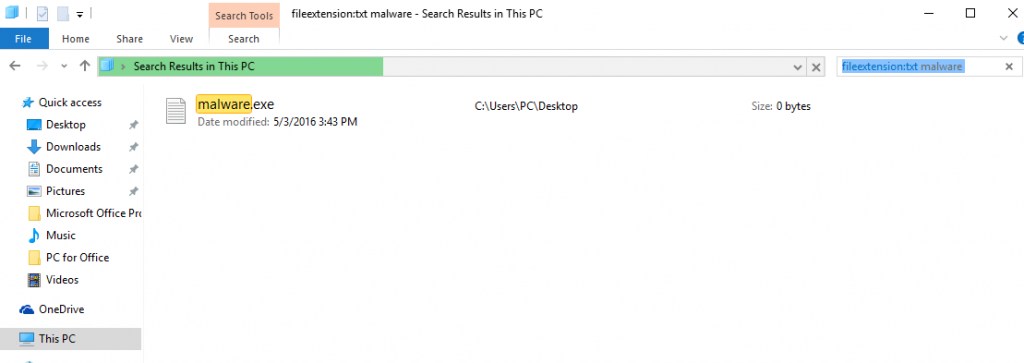
N.B. We recommend to wait for the green loading bar in the navigation box to fill up in case the PC is looking for the file and hasn't found it yet.
2.For Windows XP, Vista, and 7.
For Older Windows Operating Systems
In older Windows OS's the conventional approach should be the effective one:
1: Click on the Start Menu icon (usually on your bottom-left) and then choose the Search preference.
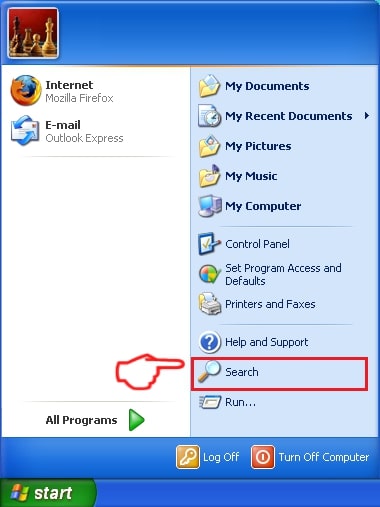
2: After the search window appears, choose More Advanced Options from the search assistant box. Another way is by clicking on All Files and Folders.
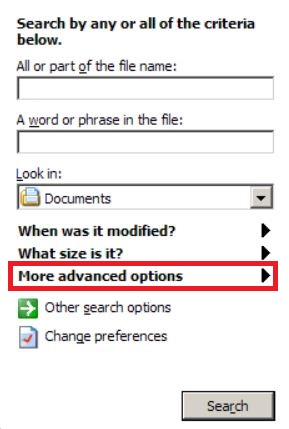
3: After that type the name of the file you are looking for and click on the Search button. This might take some time after which results will appear. If you have found the malicious file, you may copy or open its location by right-clicking on it.
Now you should be able to discover any file on Windows as long as it is on your hard drive and is not concealed via special software.
Msedge.vg FAQ
What Does Msedge.vg Trojan Do?
The Msedge.vg Trojan is a malicious computer program designed to disrupt, damage, or gain unauthorized access to a computer system. It can be used to steal sensitive data, gain control over a system, or launch other malicious activities.
Can Trojans Steal Passwords?
Yes, Trojans, like Msedge.vg, can steal passwords. These malicious programs are designed to gain access to a user's computer, spy on victims and steal sensitive information such as banking details and passwords.
Can Msedge.vg Trojan Hide Itself?
Yes, it can. A Trojan can use various techniques to mask itself, including rootkits, encryption, and obfuscation, to hide from security scanners and evade detection.
Can a Trojan be Removed by Factory Reset?
Yes, a Trojan can be removed by factory resetting your device. This is because it will restore the device to its original state, eliminating any malicious software that may have been installed. Bear in mind that there are more sophisticated Trojans that leave backdoors and reinfect even after a factory reset.
Can Msedge.vg Trojan Infect WiFi?
Yes, it is possible for a Trojan to infect WiFi networks. When a user connects to the infected network, the Trojan can spread to other connected devices and can access sensitive information on the network.
Can Trojans Be Deleted?
Yes, Trojans can be deleted. This is typically done by running a powerful anti-virus or anti-malware program that is designed to detect and remove malicious files. In some cases, manual deletion of the Trojan may also be necessary.
Can Trojans Steal Files?
Yes, Trojans can steal files if they are installed on a computer. This is done by allowing the malware author or user to gain access to the computer and then steal the files stored on it.
Which Anti-Malware Can Remove Trojans?
Anti-malware programs such as SpyHunter are capable of scanning for and removing Trojans from your computer. It is important to keep your anti-malware up to date and regularly scan your system for any malicious software.
Can Trojans Infect USB?
Yes, Trojans can infect USB devices. USB Trojans typically spread through malicious files downloaded from the internet or shared via email, allowing the hacker to gain access to a user's confidential data.
About the Msedge.vg Research
The content we publish on SensorsTechForum.com, this Msedge.vg how-to removal guide included, is the outcome of extensive research, hard work and our team’s devotion to help you remove the specific trojan problem.
How did we conduct the research on Msedge.vg?
Please note that our research is based on an independent investigation. We are in contact with independent security researchers, thanks to which we receive daily updates on the latest malware definitions, including the various types of trojans (backdoor, downloader, infostealer, ransom, etc.)
Furthermore, the research behind the Msedge.vg threat is backed with VirusTotal.
To better understand the threat posed by trojans, please refer to the following articles which provide knowledgeable details.